Organism #1: Jack Pine
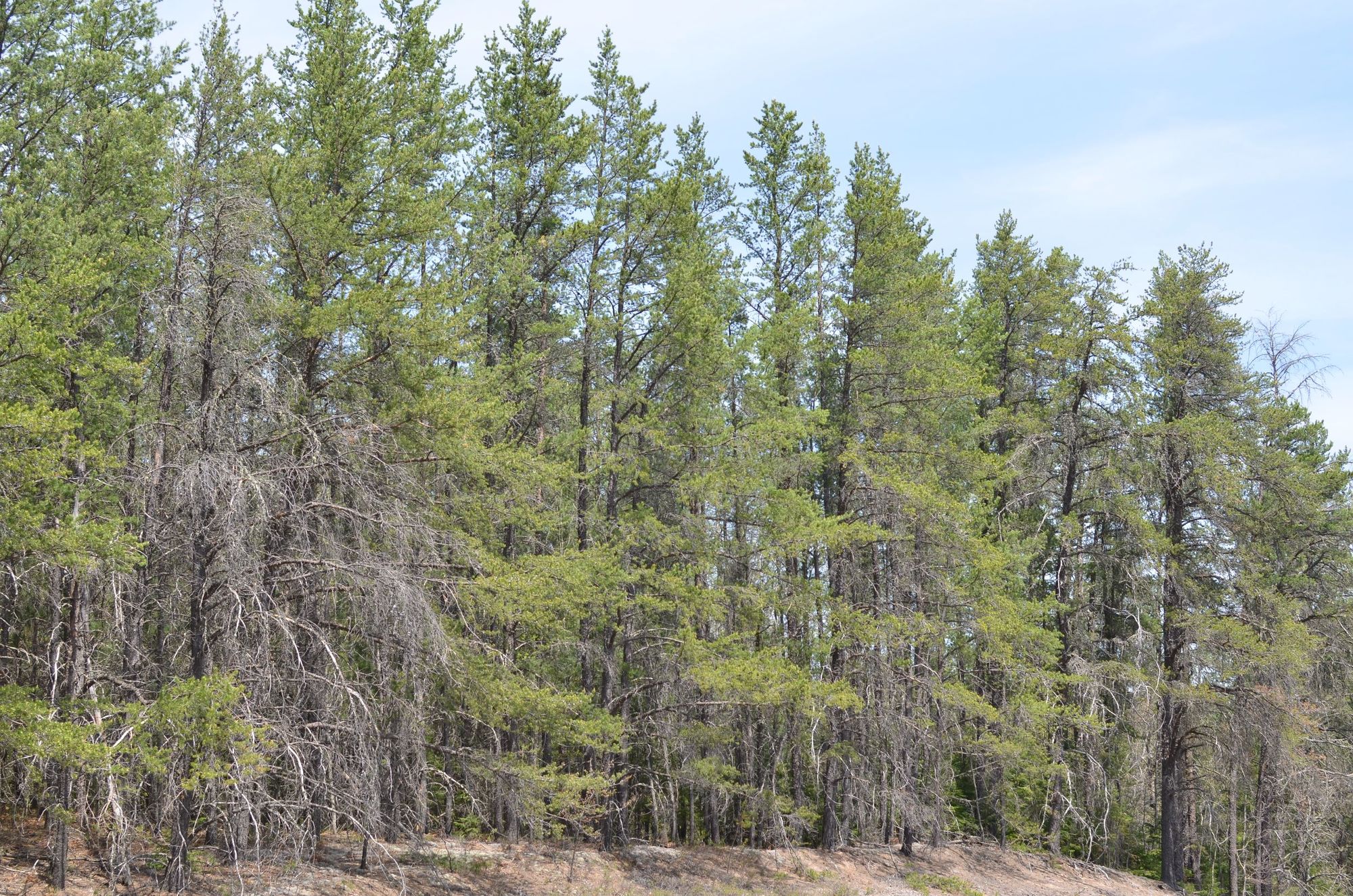
| Round | Discover | Abstract | Brainstorm | Emulate | Evaluate |
| 1 | Jack pines share resources via connected roots | Multiple connection points lend strength and stability, and trees share nutrients with weaker plants. | Resource sharing is useful for teams, groups of people, communities, schools, sharing information | A neighborhood bartering system allowing for community members to share tools, talents, skills, services with each other. | +Locally attuned +Resilient +Leverages interdependence -Benign manufacturing In spite of meeting a number of Life’s Principles, there are some functional components of a community barter/share system that could present challenges. |
| 2 | Jack pines share resources via connected roots | Branching roots run into each other and graft together. | Communities, teams schools | In order to make bartering/sharing more accessible, developing an app to connect neighbors and build a system for sharing aid/tools/skills could make the system more functional | +Locally attuned +Resilient +Leverages interdependence +Optimizes -Benign manufacturing |
| 3 | Jack pines share resources via connected roots | Sharing of resources strengthens and stabilizes jack pine networks while diverting resources to weaker plants. While this initially slows growth, strengthening weaker plants ultimately fosters greater growth. | App users | There’s something to be said for tying growth to goals. Taking the app a step further to introduce a gamification aspect or requiring giving (even if just a little) in order to receive could increase app participation | +Locally attuned +Resilient +Leverages interdependence +Optimizes -Benign manufacturing Once a cell phone or mobile device is brought into the equation, it seems benign manufacturing is likely off the table since the design requires the device to be succesful. |

Organism #2: Oriental Hornet

| Discover | Abstract | Brainstorm | Emulate | Evaluate | |
| Round 1 | Outer layer cuticles and pigments absorb solar energy and converts to electrical energy. | Banded sections use yellow and brown pigments to trap light. Brown sections have grooves that trap light inward for better absorption. Yellow sections have oval-shaped bumps that increase absorption surface area. | Things that need electricity, light, heat Solar cells Electric cars Houses Winter outerwear | Roofing alternative to solar panels that utilize color and texture to provide energy for home | +Cyclic +Leverages interdependence -Benign manufacturing -Resilient |
| Round 2 | Outer layer cuticles and pigments absorb solar energy and converts to electrical energy. | Grooves and ovals on banded sections serve different purposes | Roofs not shaped ideally for traditional solar panels | Two types of tiles–one with grooves for better absorption and one with ovals for increased absorption surface area–can be placed strategically on roof to maximize the amount of energy captured (e.g. brown for areas with limited light during the day, yellow for areas in full sun) | +Cyclic +Leverages interdependence +Resilient -Benign manufacturing |
| Round 3 | Bees construct hives with hexagonal shapes that store more with less energy | The shape of a hexagon provides maximum surface area with the same perimeter of less efficient shapes. | Roofs not shaped ideally for traditional solar panels | Shaping the tiles like hexagons allows for more flexible tile placement and maximizes the surface area available for absorption. | +Cyclic +Leverages interdependence +Resilient -Benign manufacturing |

Organism #3: Bees and Wasps

| Discover | Abstract | Brainstorm | Emulate | Evaluate | |
| Round 1 | Bees build with hexagonal cells because they are space-saving and strong | Hexagons enclose the greatest amount of space with least amount of perimeter. The offset stacking pattern gives high compression strength allowing them to store more with less energy. | Cities, apartment buildings, office spaces, storages, work environment | A hexagonal workflow model that allows for steady rearrangement and distribution of effort and resources. | +Resilient +Locally attuned and responsive +Leverages interconnectedness -Benign manufacturing While the idea of workflow can seemingly fit a number of Life’s Principles, it’s not necessarily functionally sound. |
| Round 2 | Hexagonal stacking distributes heat well. | The stacking creates tubes that regulate compression that frees up energy for distribution. | Workers, workplaces, management | A decentralized way to distribute work would allow for more opportunities for tasks to be shared. | +Resilient +Locally attuned and responsive +Leverages interconnectedness -Benign manufacturing |
| Round 3 | Red harvester ants efficiently coordinate and respond to signals. | The ants touch antennas to communicate and add timing components to signify urgency. They rely on “hub” ants to spread the word. | Workplace workflow | While decentralized, workflow still needs some delegation in order to distribute work efficiently. Group “leaders” would stay in contact with various members of their teams to ensure speedy communication. | +Resilient +Locally attuned and responsive +Cyclical +Leverages interconnectedness -Benign manufacturing This workflow plan continues to meet many of Life’s Principles but a number of outside forces could make it functionally unsound. |

 Sarah J Morrison